

elqio

elqio.

Correspondence belongs to you.

The equivalent of paper and pencil. Write to someone without depending on any particular network, without anyone else being able to read, and have it get through everywhere.

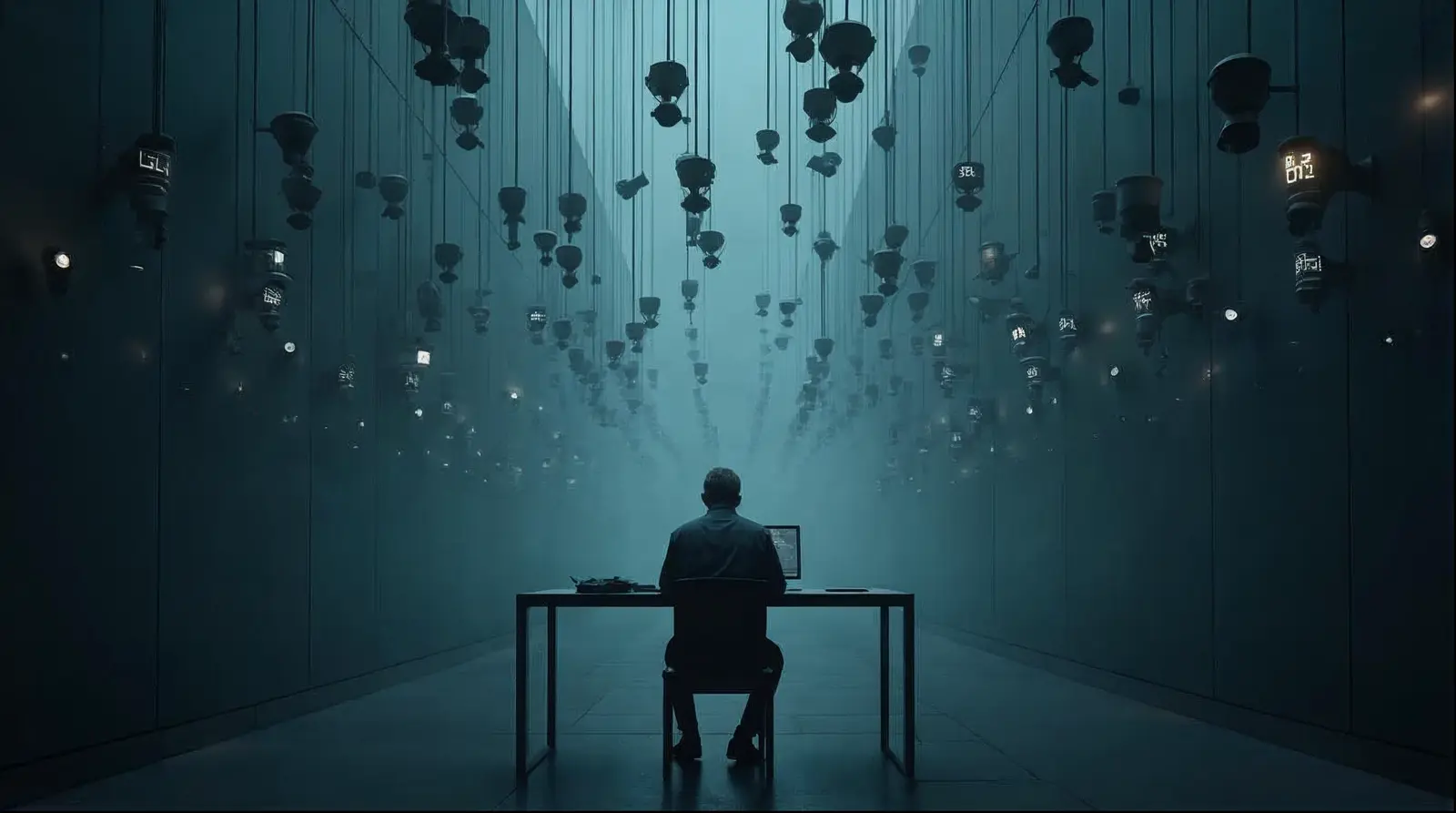
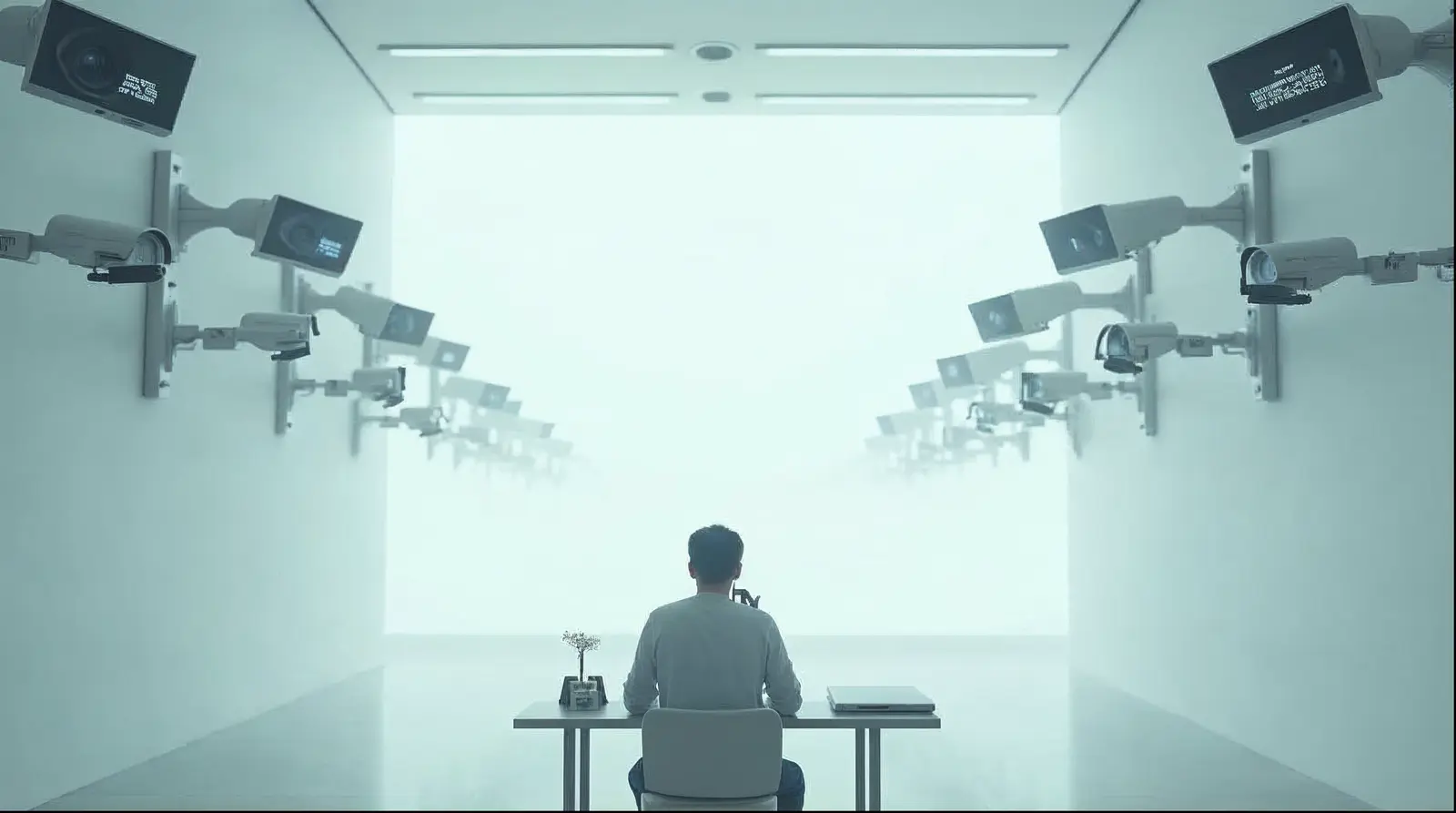
A lone person, seen from behind, writing at a table in a vast hall; dozens of hanging cameras and screens are all turned toward them. A lone person, seen from behind, writing at a table in a vast hall; dozens of hanging cameras and screens are all turned toward them. Close-up: a folded note passes from one hand to another, in an empty space. Nobody else. Close-up: a folded note passes from one hand to another, in an empty space. Nobody else.
Everyone is watching. The provider, the network, the device: who writes to whom, when, and what. And a link can be cut. The note passes from hand to hand. Nobody else sees it, nobody knows it was handed over. The only readable point is at the recipient.

Everything written today is listened to, seen, captured.

All correspondence goes through infrastructure that watches.

  • The provider sees who talks to whom and when, even when the content is encrypted.
  • The phone itself, its keyboard, its operating system, are not ours.
  • The network can be cut, by failure or by decision.
  • What is recorded today will be decryptable tomorrow by quantum computers. The method has a name: record now, decrypt later.

ELQIO takes back control where everything else is listened to: the content, the metadata, the device, the transport. Not out of fear. Because writing to someone is a right, and a right is restored with tools, not promises.

The project runs from the protocol to the hardware: protocol, identity, network, applications, devices, operating system. Everything is specified before it is coded, and every design decision is written down and dated.

The protocol

Five strengths, each one verifiable.

Each strength is detailed, with its diagram, on the Protocol page. Here is the essential.

1 / 5

End-to-end encrypted, post-quantum, no backdoor.

The message becomes an opaque block on your device and opens only on the recipient's. Nobody in between can read it, not even the operator of the service.

The key exchange is hybrid: a classical method and a post-quantum method, together. If one of them breaks one day, the other holds. Every message carries the number of its cryptographic suite: algorithms can change without breaking the network. Links between relays are hybrid post-quantum too.

ELQIO-1 · X-Wing (X25519 + ML-KEM-768) · Ed25519 + ML-DSA-65 · ChaCha20-Poly1305 · audited libraries only, no home-made crypto.

In detail

End-to-end encryption A message becomes an opaque block on the sender's device, passes three relays and an observer without ever opening, and is readable only on the recipient's device. A clock marked 2040 is crossed out: what is recorded today stays unreadable. hello sender encrypted here relays: opaque block, never opened operator, network, observer ■■■■■■■■ hello decrypted here recipient 2040 recorded today, still unreadable tomorrow ELQIO-1 : X-Wing (X25519 + ML-KEM-768) · Ed25519 + ML-DSA-65 · ChaCha20-Poly1305
Encrypted on the device, opaque on the way, decrypted only on arrival. What is recorded today stays unreadable in 2040.
2 / 5

Who talks to whom is known to nobody.

Encrypting the content is not enough: knowing who writes to whom, and when, already says a lot. ELQIO protects that metadata too.

Each message passes through three relays, a guard, a middle and an exit, under three layers of encryption. Each relay removes one layer and knows only its neighbours. Messages are split into redundant fragments deposited in pseudonymous mailboxes spread over several relays: a part of them is enough to rebuild the message. No relay sees the IP address and the identity together.

An automated non-linkability proof is replayed at every demonstration on the logs of all relays of the network.

In detail

Metadata anonymity A message is split into redundant fragments, wrapped in three layers of encryption, and passes a guard relay, a middle relay and an exit; each relay removes one layer and knows only its neighbours. Fragments are deposited in pseudonymous mailboxes on several relays. From outside, the traffic is only a row of identical blocks. message fragments redundant guard peels layer 1 middle peels layer 2 exit peels layer 3 7F2AC19D3B6E pseudonymous boxes rotating labels seen from outside uniform noise: no relay sees the IP address and the identity together Each relay knows only the previous and the next one.
Fragments, three layers, three relays, pseudonymous boxes. Seen from outside: uniform noise.
3 / 5

Verifiable, revocable identities, with no access to content.

Each person has a unique identifier, published in a signed, chained and replicated registry that anyone can verify.

E3Q9-6FYS-FRWF-KQRZ-JEV2-ZC50-J78Y-KEKS

An account can be revoked, for criminal use or by court decision: the network stops relaying its messages. This never opens access to what was written. Revoking is not reading.

In detail

Verifiable, revocable identities A registry of signed events, chained to one another and replicated across several copies. An identity is published there, then marked revoked by a later event; the network stops relaying its messages. Beside it, a closed lock: message content stays inaccessible. Revoking is not reading. Registry of signed events, chained, replicated. #4F1A…#9C03…#E27B…#51D8… eventpublicationeventrevocation signedE3Q9-6FYS…signedE3Q9-6FYS… E3Q9-6FYS FRWF-KQRZ… E3Q9-6FYS FRWF-KQRZ… REVOKED the network stops relaying content still sealed replicated copies, anyone can verify Revoking is not reading.
A signed chain registry, a "revoked" seal on an identity, a content lock that stays closed.
4 / 5

The stamp: an anonymous business model.

Sending costs one stamp, like a letter. The stamp is bought from the operator but blind-signed: the operator knows it sold a hundred stamps, never which one was used by whom. The purchase itself goes through the anonymous network, not through an identifiable connection.

No advertising, no data exploitation. The service is paid for the way a postage stamp is. The local radio network stays free.

In detail

The blind-signed stamp On the left, the operator signs a stamp slipped inside an opaque envelope: it signs without seeing. In the centre, the stamp out of the envelope, with perforated edges, carries the valid signature. On the right, a relay checks the signature and accepts the deposit. The operator knows it sold a hundred stamps, never which one was used by whom. operator sells stamps opaque envelope the operator signs without seeing signed · valid one message = one stamp relay verifies, accepts the purchase itself goes through the anonymous network A hundred stamps sold. Which one was used by whom: unknown. RSA-2048 blind (RSABSSA, RFC 9474) · no advertising, no data exploitation
The signer signs under an opaque envelope, without seeing. The relay checks the stamp without knowing who bought it.
5 / 5

Transport independent, resilient.

An ELQIO message is a binary block designed to the bit to fit in a LoRa radio frame. It travels over the Internet, by radio hop by hop through home boxes that relay it, as an audio signal over a plain phone line, and by satellite.

If one channel fails, another takes over. Deferred delivery is a normal case, not a failure. Relays update themselves, through releases signed by several maintainers and reproducible builds.

Compact fragment: exactly 48 bytes, 35 of them data. The most robust LoRa payload in Europe is 51 bytes; 3 go to the radio mesh, 48 to the fragment.

In detail

Transport independent The same 48-byte block leaves from the left and arrives identical on the right by four routes: Internet fibre, LoRa radio waves relayed from roof to roof, an audio signal over a phone line, and a satellite, through a partner operator. If one route fails, another takes over. 48 bytes 48 bytes identical Internet LoRa radio, roof to roof audio signal over a phone line satellite, partner operator one channel fails
The same block over four routes: fibre, radio waves between rooftops, a phone call, satellite. It arrives identical.

Devices

Three levels of control. The same core.

Protocol, identity, encryption, transports: the core is identical everywhere. Only the interface and the isolation change. Devices page.

The app

On the phone you already have, iOS or Android. The entry point. Trust stops at the host system: we say so, we do not hide it.

elqio.os

An inexpensive Android phone, reflashed with a minimal ELQIO system. Only what is needed runs, keyboard included. Nothing else to listen in.

The box

Build it yourself on a Raspberry Pi or equivalent: home relay, LoRa radio gateway, audio modem over a phone line, messaging terminal.

The network

In service, end to end.

The protocol core, identity, the relays, stamps and their anonymous purchase, the four transports, the apps and the devices are specified, coded in Rust and in service. The network in detail.

  • Core

    Cryptography, identity, registry

    ELQIO-1, verifiable identifiers, a signed and replicated registry.

    in service
  • Relays

    Relay network and stamps

    Onion routing, pseudonymous mailboxes, mandatory hybrid post-quantum TLS, blind-signed stamps bought through the anonymous network.

    in service
  • Transports

    Internet, radio, phone line, satellite

    The same block over four routes. If one fails, another takes over.

    in service
  • Devices

    Apps, elqio.os, box

    The same core in three shells, from the ordinary phone to the hardware you assemble.

    in service

Take part

A protocol is reviewed by many.

The specifications are open to reviewers who ask. Every design decision is written down and dated.

  • Review the specifications and point out what is missing.
  • Run a relay.
  • Build a box and extend your neighbourhood's radio network.
  • Report a vulnerability, responsibly.